In our previous article, we covered the Best Digital Marketing Training in Casablanca, Morocco, and why sharpening your marketing skills is one of the most valuable investments you can make today. But great marketers don’t just master tools and tactics, they understand the world around them. And right now, one of the most significant events shaping global markets is the tension between Iran and the United States. Today, we break down exactly what this means for the marketing industry, and what actionable steps smart marketers should be taking.
Oil spiked. Ad budgets tightened. Consumer confidence dropped in markets across three continents, all within days.
The Iran-USA conflict is not just a geopolitical story. Every escalation sends ripples through the global economy, reaching marketing budgets, consumer behavior, and brand strategy faster than most people expect.
If you work in marketing, anywhere in the world, this conflict is already affecting your work. Here’s how.
1. Oil Prices Rise, and Marketing Budgets Feel It
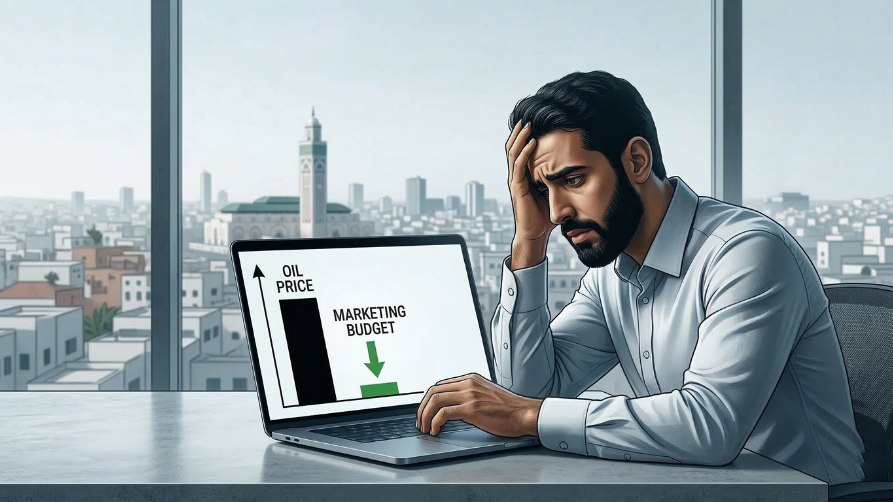
One of the most immediate and measurable effects of the Iran-USA conflict is on global oil prices. Iran is one of the world’s major oil producers, and any military or diplomatic escalation raises energy costs worldwide.
What this means for marketing:
- Operational costs rise across industries , logistics, manufacturing, retail , forcing companies to cut spending elsewhere, and marketing budgets are often the first to be trimmed
- Consumer purchasing power decreases as fuel and goods become more expensive, which directly impacts demand and changes what audiences are willing to buy
- E-commerce businesses that rely on shipping and delivery face higher costs, which affects pricing strategies and promotional campaigns
- Marketers are pushed to justify every dirham spent, making data-driven decision-making more critical than ever
2. Consumer Behavior Shifts Under Uncertainty
When geopolitical tension rises, consumer psychology changes, even among audiences who feel geographically distant from the conflict. Anxiety increases and people become more cautious with spending, prioritizing essentials over discretionary purchases.
News consumption surges during these periods, pulling attention away from entertainment and making meaningful brand engagement harder to capture. Consumers grow more selective and skeptical, scrutinizing what brands actually stand for. News consumption surges, pulling attention from entertainment and making brand engagement harder to earn. Consumers grow more selective, scrutinizing what brands actually stand for. In Morocco and the MENA region, where cultural and economic ties to the Middle East run deep, local market awareness becomes a genuine competitive advantage.
3. Digital Advertising Costs and Performance Are Affected
The Iran-USA conflict creates measurable turbulence in digital advertising. Major brands tend to pause or reduce their campaigns during periods of high uncertainty, which lowers competition in ad auctions and can temporarily decrease CPM and CPC costs. Consequently, this creates a window of opportunity that agile marketers can take advantage of. Nevertheless, the situation is not without its risks.
Moreover, as news platforms and social media experience significant traffic spikes, brand safety concerns increase alongside them. In particular, automated ad placements next to conflict-related content can quietly but seriously damage brand perception.
Platforms like Meta, Google, and TikTok routinely adjust content policies during crises, affecting targeting and campaign approvals with little notice.
As a result, marketers must monitor their campaigns more closely than usual and stay ready to pause or pivot at any moment.
4. The Effect on Marketing Training Centers
The Iran-USA war doesn’t just affect brands and advertisers, it hits marketing training centers too, including right here in Casablanca.
When economic uncertainty rises, people don’t stop investing in themselves, they become more selective about it:
- They choose programs that teach immediately applicable, measurable skills over theoretical ones
- They look for training that integrates AI tools, knowing that’s what the market now demands
- Training centers that can’t clearly prove their value lose enrollment, while those that adapt grow precisely because of the crisis
At the same time, crisis periods drive demand for upskilling. Professionals facing job market uncertainty turn to training to stay competitive. Companies under economic pressure actively seek marketers who can deliver results with limited budgets, and they hire the ones who were trained for exactly that.
Local e-commerce platforms are especially well-positioned, as convenience, proximity, and trust have never mattered more to consumers.
When the market gets harder to navigate, the demand for people who truly understand it only grows stronger.
5. Local Brands Gain a Strategic Opportunity
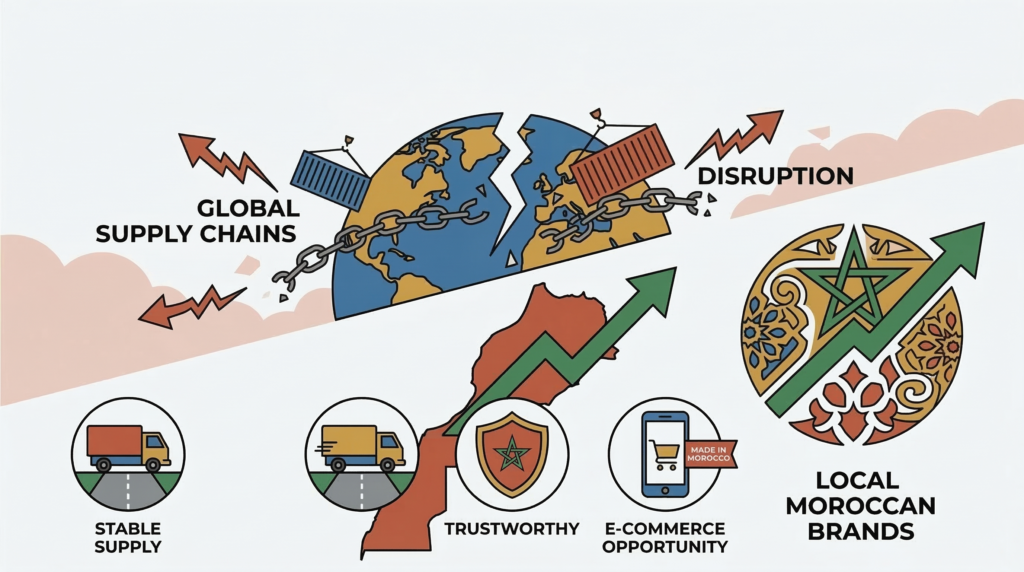
Every global disruption creates space for local brands to grow, and this conflict is no different. As international supply chains become less reliable, consumers and businesses naturally start looking closer to home for products and services. Local brands that project stability and trustworthiness during uncertain times have a real chance to capture share from global players.
For Moroccan businesses, this is a concrete opportunity to strengthen local brand identity and build customer loyalty that outlasts any crisis.
Local e-commerce platforms stand to benefit most, convenience, proximity, and trust become more valuable than ever in the eyes of the consumer.
6. The Practical Actions Every Marketer Should Take Now
Review active campaigns and honestly assess whether your messaging fits the current emotional climate.
Monitor ad costs daily, volatility creates both risks and opportunities, and timing is everything.
This is also the right moment to strengthen SEO and organic content strategy, since paid ad unpredictability makes owned channels more valuable than ever.
A smart marketer will also scenario plan their content calendar, keeping backup content ready that can quickly replace promotional messaging if the situation escalates.
Studying consumer sentiment data through tools like Google Trends can reveal in real time how your audience’s interests and concerns are shifting, intelligence that no ad budget can replace.
And through all of it, communicating with clarity and empathy remains the most powerful tool available, because audiences in uncertain times consistently reward brands that choose to speak honestly and human.