
Imagine spending months perfecting your SEO strategy, climbing to the first page of Google, and then watching your traffic quietly drop because users stopped clicking on links altogether. They got their answers straight from an AI. No click needed. No visit recorded. Just… gone.
This is not a hypothetical. It is happening right now, and it is exactly why GEO has become one of the most important conversations in digital marketing this year.
What GEO actually is
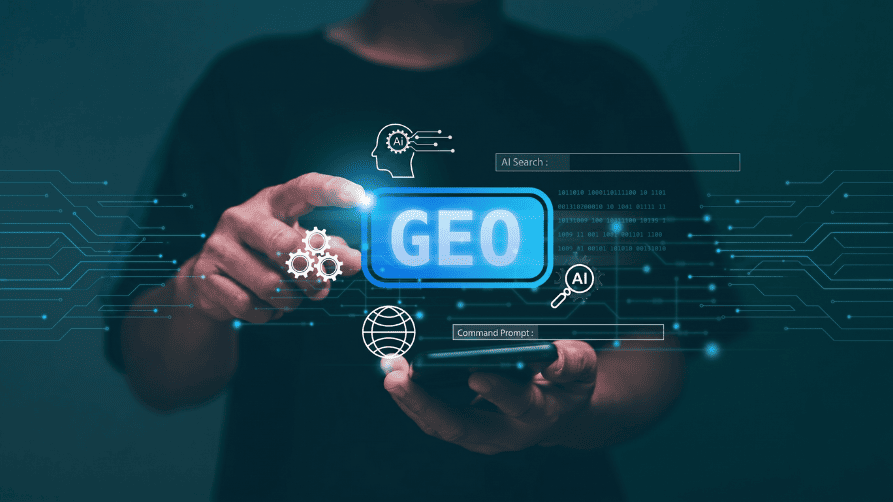
GEO stands for Generative Engine Optimization. It refers to the practice of optimizing your content so that AI-powered tools like ChatGPT, Google’s AI Overviews, Perplexity, and similar platforms surface your brand, your content, or your expertise in their generated responses.
Think of it this way. SEO gets you ranked on a search engine results page. GEO gets you cited, referenced, or recommended inside an AI-generated answer. Two very different outcomes, two very different strategies.
The rise of GEO is directly tied to how people are searching in 2026. More users are typing full questions into AI tools and accepting the summarized answer without ever visiting a website. If your content is not the kind that AI systems trust and pull from, you simply do not exist in that conversation.
How SEO works and where it still holds value
SEO has been the backbone of digital visibility for over two decades. It is built around helping search engines understand, index, and rank your content based on relevance, authority, and technical health.
Keyword research, backlink building, on-page optimization, page speed, structured data. These are the tools of SEO, and they remain genuinely useful. For local searches, product comparisons, navigational queries, and discovery-based browsing, traditional search engines still drive significant traffic.
The problem is not that SEO is dying. The problem is that it is no longer enough on its own. Relying solely on SEO in 2026 is like having a great storefront in a neighborhood where fewer and fewer people are walking by.
GEO vs SEO: The Core Differences Explained
Here is where things get interesting. GEO and SEO share some DNA, but they operate on fundamentally different logic.
SEO optimizes for algorithms that rank pages. GEO optimizes for AI models that generate answers. SEO measures success through rankings, clicks, and organic traffic. GEO measures success through citations, brand mentions, and inclusion in AI responses.
With SEO, you are competing for position on a list. With GEO, you are competing to become the source an AI trusts. That requires a different kind of content: authoritative, well-structured, factually clear, and written in a way that answers questions directly and completely.
GEO also demands a stronger focus on brand credibility. AI models pull from content that has established trust across the web. This means your presence on third-party platforms, your expert quotes in publications, your reviews, and your consistent messaging all feed into whether an AI decides you are worth citing.
The link between GEO, Branding, and how you show up online
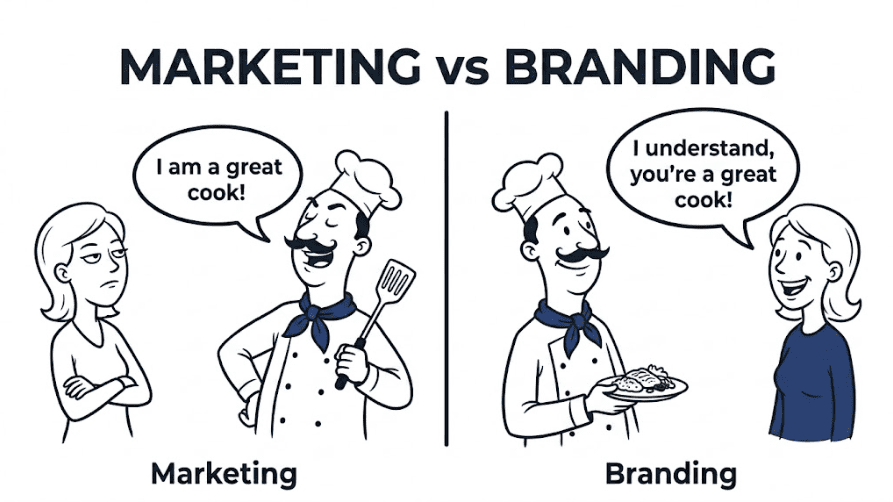
This is where strategy gets deeper. If you have read our piece on Marketing vs. Branding: What’s the Real Difference, you already know that branding is about what people believe about you, not just what you say about yourself.
GEO works the same way. AI tools do not just scan your website. They synthesize what the entire web says about your brand. Your thought leadership, your reputation, your consistency across platforms. A strong brand identity does not just win customers. In 2026, it wins citations from AI systems. The businesses that invested in clear positioning and genuine authority are now the ones showing up inside AI-generated answers. Branding and GEO are more connected than most people realize.
How to start optimizing for GEO without abandoning SEO
The good news is that GEO does not require you to throw away your existing SEO work. It requires you to build on top of it with a new layer of thinking.
Start by writing content that answers specific questions in full. AI models love content that is complete, factual, and structured around how real people ask questions. Use clear headings, short paragraphs, and direct answers. Think FAQ format, definition-based content, and expert commentary.
Next, build your presence beyond your own website. Get quoted in industry articles. Contribute to respected publications. Encourage genuine reviews. The more the web reflects your expertise from multiple angles, the more likely AI systems are to treat you as a reliable source.
Finally, track your brand mentions and AI appearances. Tools that monitor whether your brand shows up in AI-generated answers are becoming essential. This is your new visibility metric alongside traditional rankings.
GEO is not a trend, it is the new baseline
Some marketers are still treating GEO as an emerging topic to watch. That window has closed. With AI-generated answers now appearing across Google, Bing, and independent AI platforms, the shift is already mainstream.
Brands that adapt now will have a real advantage. Not just in traffic, but in trust. When an AI recommends your content or references your expertise, it carries a weight that a ranked link simply does not. It signals credibility at a moment when the user is already engaged and looking for an answer.
The businesses winning in 2026 are not choosing between GEO and SEO. They are using SEO as the foundation and GEO as the layer that makes them impossible to ignore.
The Mindfull take on GEO
At Mindfull, we have been watching this shift closely, and our honest opinion is this: most businesses in Morocco and the MENA region are still optimizing for a search behavior that is quietly changing beneath their feet. GEO is not a Silicon Valley conversation anymore. It is a practical, urgent question for any brand that wants to stay visible in the next two to three years. What excites us about GEO is that it rewards the things we have always believed in, namely clear positioning, genuine expertise, and consistent brand voice. It is not about gaming a system. It is about actually being worth citing. And that is a standard we think every ambitious brand should be holding itself to, not just for AI, but for every audience it wants to earn the trust of.