
You walk into a supermarket with a list. Milk. Bread. Eggs. You walk out with a scented candle, a limited-edition chocolate bar, and a pair of socks you didn’t need. Sound familiar?
You didn’t make those choices. Your brain did, and someone designed it that way.
This is neuromarketing in action. A discipline so powerful, so quietly embedded in every ad, every color, every checkout button, that most people never see it happening. But once you understand it? You’ll never look at a marketing campaign the same way again.
What Is Neuromarketing?
Neuromarketing is the science of applying neuroscience and consumer psychology to marketing strategies. It studies how the human brain responds to advertising, product design, pricing, and brand messaging, using tools like EEG (electroencephalography), fMRI brain scans, eye-tracking technology, and biometric data.
Unlike traditional marketing research, which relies on what consumers say they feel, neuromarketing measures what they actually feel, tapping into emotional responses, subconscious triggers, and cognitive biases that drive purchasing decisions.
The goal is simple, and yet profound: to understand the consumer brain deeply enough to predict, and influence, buying behavior before a conscious decision is even made.
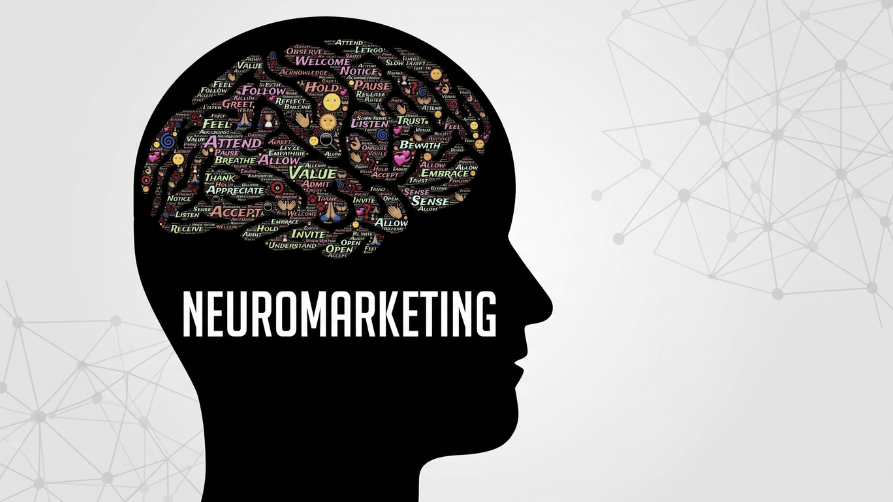
The Science Behind the Strategy: How the Brain Makes Buying Decisions
Here’s something your rational mind doesn’t want to hear: 95% of purchase decisions are made subconsciously, according to research from Harvard Business School professor Gerald Zaltman.
The brain operates in layers. The neocortex handles logic and language. But the limbic system, the emotional brain, is what drives action. And beneath both sits the reptilian brain: the oldest, fastest part of your brain, wired purely for survival and instinct.
Neuromarketing speaks directly to these deeper systems. It bypasses the rational gatekeeper and targets emotion, memory, and instinct, which is exactly why it works so well.
The 3 Brains of Neuromarketing:
1. The Reptilian Brain: Responds to contrast, novelty, and self-relevance. « This is for YOU. » « NEW formula. » « LIMITED TIME. » All reptilian triggers.
2. The Limbic Brain: Processes emotion and memory. Storytelling, music, nostalgia, and social proof all activate this layer. It’s what makes you feel a brand.
3. The Neocortex: Rationalizes the decision your emotional brain already made. Price justification, feature lists, and data all speak here, but they confirm, rarely initiate.
Key Neuromarketing Techniques Used by Top Brands
The world’s most successful companies, Apple, Coca-Cola, Amazon, Netflix, don’t just guess. They invest heavily in neuromarketing research to engineer experiences that convert. Here’s how:
1. Color Psychology in Neuromarketing
Color is one of the most powerful and underestimated neuromarketing tools. Research shows that color increases brand recognition by up to 80% and influences up to 90% of first impressions.
- Red creates urgency and stimulates appetite (McDonald’s, Coca-Cola, Netflix)
- Blue builds trust and calm (Facebook, PayPal, Samsung)
- Orange drives impulse action and enthusiasm (Amazon’s « Buy Now » button)
- Green signals safety, health, and sustainability
In neuromarketing, every color choice is intentional. Nothing is arbitrary.
2. The Power of Storytelling and Emotional Triggers
The human brain is wired for narrative. When you hear a story, your brain releases oxytocin, the trust hormone. This makes storytelling the single most effective neuromarketing technique for building brand loyalty.
Brands that use emotional storytelling in their advertising see up to 31% higher long-term effectiveness than those relying purely on product promotion (source: Institute of Practitioners in Advertising).

3. Scarcity and Loss Aversion
« Only 3 left in stock. » « Offer ends tonight. » These aren’t just sales tactics, they’re direct applications of loss aversion, a cognitive bias documented by Nobel laureate Daniel Kahneman. The fear of losing something is twice as powerful psychologically as the pleasure of gaining it.
Neuromarketing leverages this relentlessly: limited editions, countdown timers, and exclusive access all trigger the reptilian brain’s survival instincts.
4. Social Proof and Mirror Neurons
Humans are deeply wired for social conformity. Mirror neurons in the brain fire both when we perform an action and when we observe someone else performing it, which is why testimonials, reviews, and user-generated content are such potent neuromarketing tools.
« 10,000 customers trust us » isn’t a statistic. It’s a neurological shortcut your brain uses to determine safety.
5. The Anchoring Effect in Pricing
Neuromarketing pricing strategies exploit cognitive anchoring, the brain’s tendency to rely heavily on the first number it sees.
Present a product at $199, then « slash » it to $99, and $99 feels like a bargain. Present the same product at $99 alone, and the brain has no reference point to feel excited. This is why « was/now » pricing dominates e-commerce.
6. Sensory Marketing
Neuromarketing extends beyond the visual. Sensory marketing engages all five senses to create deeper brand associations:
- Smell: Bakeries pump artificial bread scent to increase dwell time
- Sound: Distinct audio logos (Intel, McDonald’s « ba da ba ba baa ») create instant brand recall
- Touch: Premium packaging weight signals quality before the product is even opened
Neuromarketing in the Digital World: Online Applications
Digital neuromarketing has exploded with the rise of data, AI, and personalization technology. Here’s how it manifests online:
UX and Website Design
Every element of a high-converting website is built on neuromarketing principles:
F-pattern and Z-pattern reading: Eye-tracking research reveals how users scan pages, guiding headline and CTA placement
White space: Reduces cognitive load, focuses attention
Faces in imagery: Images of human faces trigger emotional engagement and direct eye gaze toward CTAs
Above the fold design: The reptilian brain judges a website in 50 milliseconds
Neuromarketing and Video Advertising
Video is the richest medium for neuromarketing because it engages auditory, visual, and emotional processing simultaneously. The first 3 seconds of any video are critical — this is when the brain decides to stay or leave.
Successful video ads use:
Unexpected openings (novelty triggers), Human faces showing genuine emotion, Music that matches the desired emotional state, Narrative arcs (even micro ones) that drive dopamine release at the resolution.
Personalization and AI-Driven Neuromarketing
In 2026, AI-powered personalization represents the cutting edge of neuromarketing. Algorithms analyze behavioral data, scroll depth, click patterns, dwell time, to serve content perfectly calibrated to individual psychological profiles.
Netflix’s recommendation engine, Amazon’s « Customers also bought, » Spotify’s Discover Weekly, these are all neuromarketing at scale, using machine learning to predict what your brain will want next.
Real-World Neuromarketing Case Studies
Case Study 1: Coca-Cola’s « Share a Coke » Campaign
When Coca-Cola replaced its logo with personal names, the brand used the self-relevance effect, a core neuromarketing principle that says the brain prioritizes information about itself. Seeing your own name on a product activates the same neural regions as a gift. Sales rose 2% in the US after years of decline.
Case Study 2: PayPal and the Speed Trigger
PayPal ran neuromarketing tests comparing ads that emphasized « security » versus those emphasizing « speed and ease. » Brain scans showed that speed messaging activated reward centers far more powerfully. The campaign shifted, and conversion rates followed.
Case Study 3: Campbell’s Soup Redesign
Campbell’s spent millions on neuromarketing research before redesigning their soup can labels. Eye-tracking showed consumers never looked at the bowl of soup at the top, they focused on the bottom of the label. The redesign moved key information accordingly.
Neuromarketing and the Future of Digital Marketing
Neuromarketing is no longer a niche academic field. It has moved from brain labs to boardrooms, from research papers to ad agencies, from theory to the real-time algorithms shaping what you see online every day.
As AI tools become more sophisticated, the convergence of neuroscience, behavioral economics, and digital marketing will accelerate. Brands that understand neuromarketing principles will have an enormous competitive advantage, not just in crafting better ads, but in building deeper, more meaningful connections with their audiences.
The future of marketing isn’t louder. It’s smarter, more human, and more neurologically resonant.
Is Neuromarketing the Next Step in Your Digital Marketing Career?
If neuromarketing has sparked your curiosity, you’re already thinking like a marketer of the future. But understanding how brands influence behavior is just one piece of the puzzle.
The bigger question is: how do you turn this knowledge into a career?
This is where digital marketing becomes a compelling path. Whether you want to specialize in consumer psychology, UX strategy, content storytelling, or data-driven personalization, digital marketing in 2026 offers more entry points than ever before.
In our in-depth guide, « Is Digital Marketing A Good Career In 2026? », we break down the job market realities, the most in-demand skills (yes, neuromarketing knowledge is one of them), salary expectations, and the tools professionals use every day. If you’re wondering whether this field is worth pursuing, that article is your next read.